
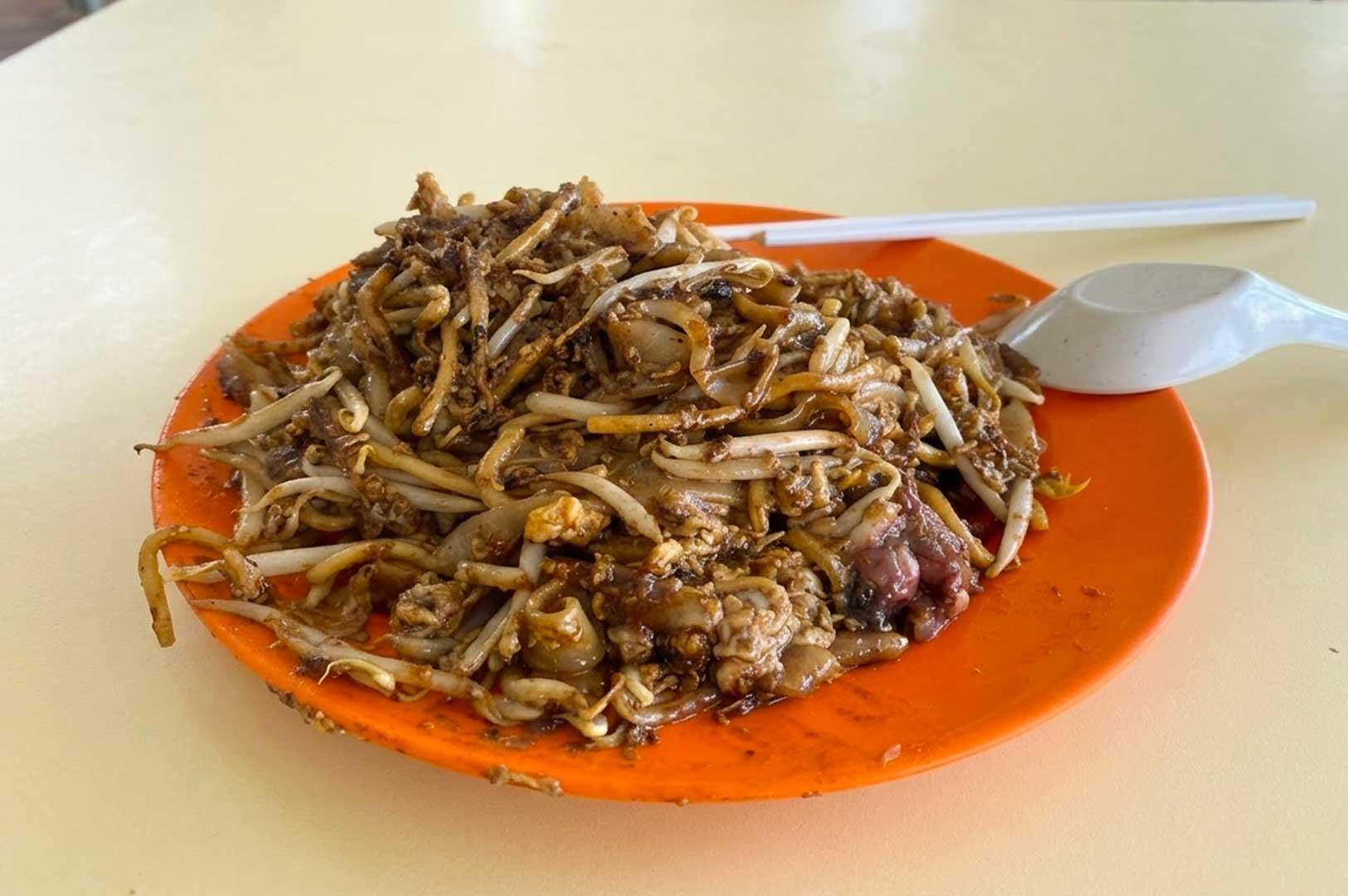
Breakfast in Havelock starts before most of the city is properly awake. Taxi drivers pull in for a quick plate between fares. Residents from the surrounding blocks settle at their usual tables. By late morning, office workers join the queues, lanyards tucked into shirt pockets.
Much of the food in Havelock is shaped by these routines. People know what they want, and they know which stall makes it the way they like.
Havelock Road Food Centre sits at the centre of all this. It offers char kway teow fried plate by plate, Teochew kway chap, soup both drawn from a fish head, prawn noodles, Cantonese roast meats, traditional Singaporean dishes, and of course, traditional Singapore hawker food steamed to order, including the famous turtle soup that draws a loyal following.
None of it is especially new, and that is part of the appeal. The dishes here have lasted because people keep coming back for them.
Food Stalls in Havelock Worth Knowing
These stalls cover the familiar range of the centre, from rich wok-fried noodles to light soups and a sweet snack to finish. Each one has a clear reason to be on your list.
|
Hawker Stall |
How They Make the Cut |
|---|---|
|
Individually fried char kway teow with cockles, Chinese sausage, bean sprouts, and pork lard, known for its generous portions and savoury-sweet wok-fried noodles. | |
|
Longstanding Teochew kway chap stall serving customisable braised pork, intestines, braised eggs, tau pok, and rice noodle sheets. | |
|
Known for tom yum fried fish soup and lighter seafood soup preparations with sliced fish, prawns, tofu, and vegetables. | |
|
Traditional laksa specialist recognised for its spice-forward gravy and generous cockle portions, including an Only Cockles Laksa option. | |
|
Established prawn noodle business with roots in the 1960s, serving traditional prawn mee in both soup and dry preparations. | |
|
Cantonese-style roast meats, including roast pork belly, char siew, roast duck, and wanton noodles. | |
|
Veteran hawker’s bak chor mee featuring vinegar-seasoned noodles, mushrooms, minced pork, fried shallots, and crispy pork lard. | |
|
Traditional fishball noodles offering dry and soup preparations, with springy noodles, bouncy fishballs, and fish cake. | |
|
Traditional tutu kueh with peanut and coconut fillings, prepared using steamed rice flour and longstanding preparation methods. |
This is not a ranking. Some of these stalls suit a big appetite, others a light lunch, and one is best saved for the walk out.
1. Meng Kee Fried Kway Teow: Old-School Char Kway Teow Worth the Queue
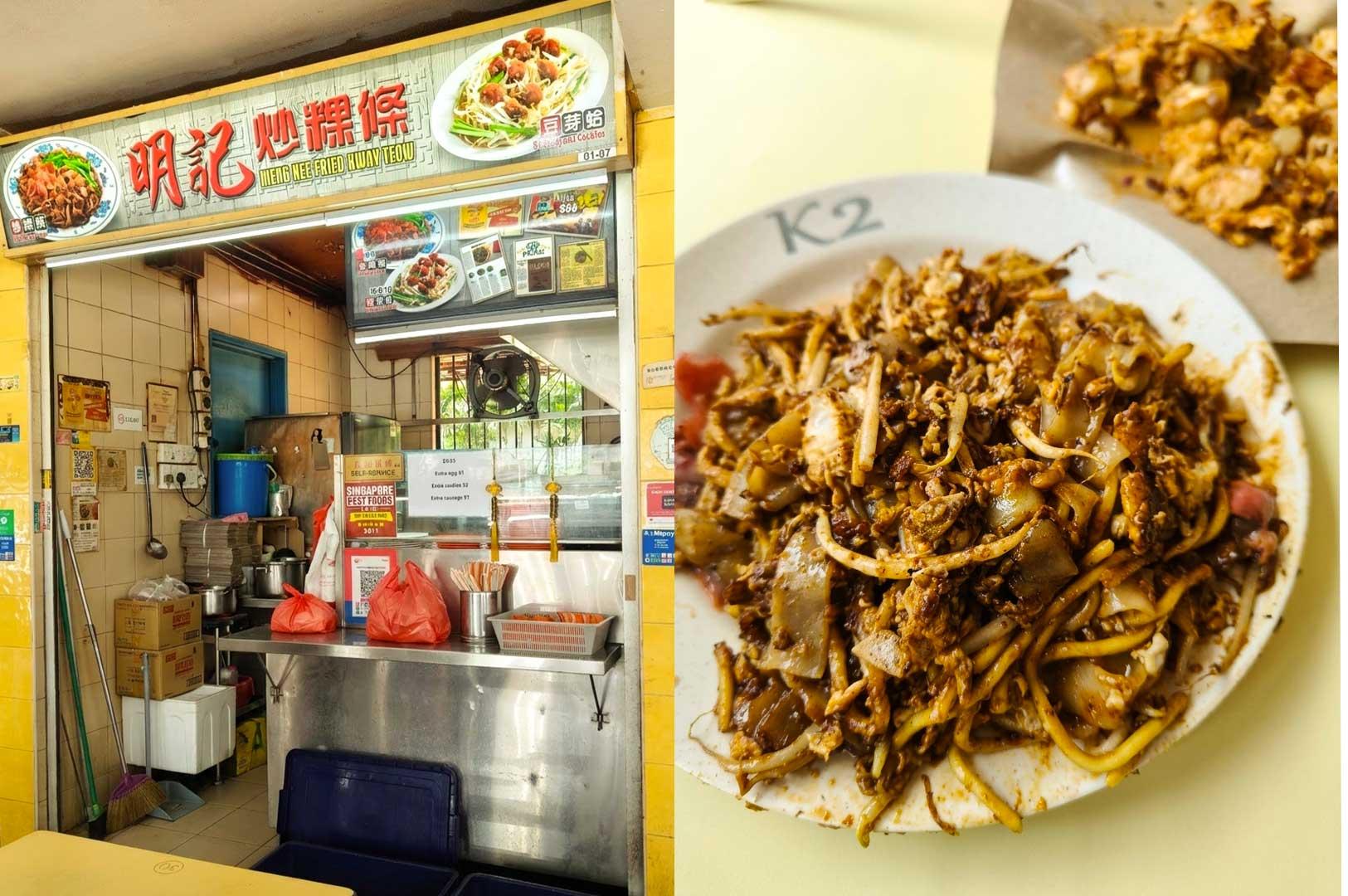
Opening Hours: Mon-Sat, 9 AM to 3:30 pm; Closed Sun
Meng Kee has been frying char kway teow for more than 40 years. The family business is now run by the original hawker’s daughter, and each plate is still fried on its own rather than in large batches. That slower method is a big part of why the stall keeps its loyal following.
The plate combines flat rice noodles and yellow noodles with cockles, bean sprouts, egg, lup cheong, and pork lard. Reviews point to noticeable wok hei, and the seasoning leans savoury-sweet. The pork lard adds both richness and crunch. Larger servings have been described as generous, so this is a filling meal rather than a light one.
Wallet Check: Around S$4–S$5, which is fair for a plate fried individually.
Order This: Char Kway Teow with cockles, lup cheong, and pork lard.
The Vibe: A busy, traditional stall with plenty of returning customers.
Reality Check: Diners who prefer a less sweet or less rich char kway teow may find this heavy.
Book It or Wing It: Wing it, and aim for a time outside peak hours.
2. Covent Garden Kway Chap: Traditional Teochew Flavours That Have Stayed Familiar
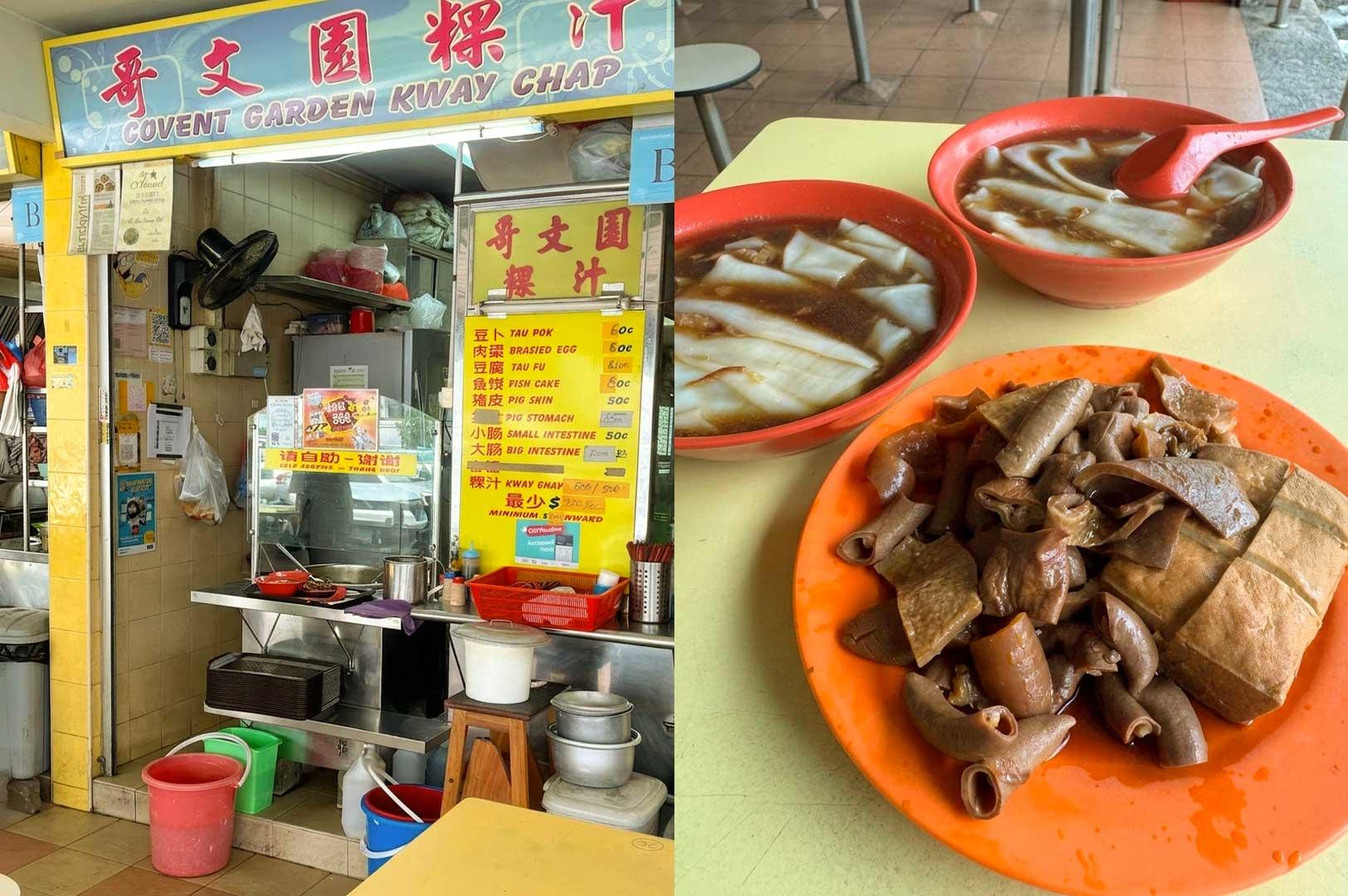
Opening Hours: Tues-Sat, 7:30 AM–1:30 PM; Closed Sun-Mon
Covent Garden Kway Chap was started in the early 1960s by Mdm Chua and has remained a family business. It specialises in traditional Teochew kway chap, the kind where you choose your braised ingredients one by one. For many regulars, that ritual is as much a part of the meal as the food.
Flat rice noodle sheets come in a lightly seasoned broth, with a spread of braised pork belly, intestines, pork skin, braised egg, tau pok, tofu, and fish cake to choose from. Reviewers describe the intestines as tender and carefully cleaned. The tau pok soaks up the savoury sauce well. Because you build your own plate, you control both the portion and the bill.
Wallet Check: Basic orders start at around S$3–S$3.50, with each extra ingredient adding to the total.
Order This: Kway Chap with braised pork belly, intestines, tau pok, and braised egg.
The Vibe: A breakfast and early-lunch stall with a steady crowd of regulars.
Reality Check: Offal is central to the menu, so first-timers may want to start with pork belly and egg.
Book It or Wing It: Wing it, ideally at breakfast or in the late morning.
3. You Yi Fish Soup: Fried Fish and Seafood Soup for a Comforting Lunch
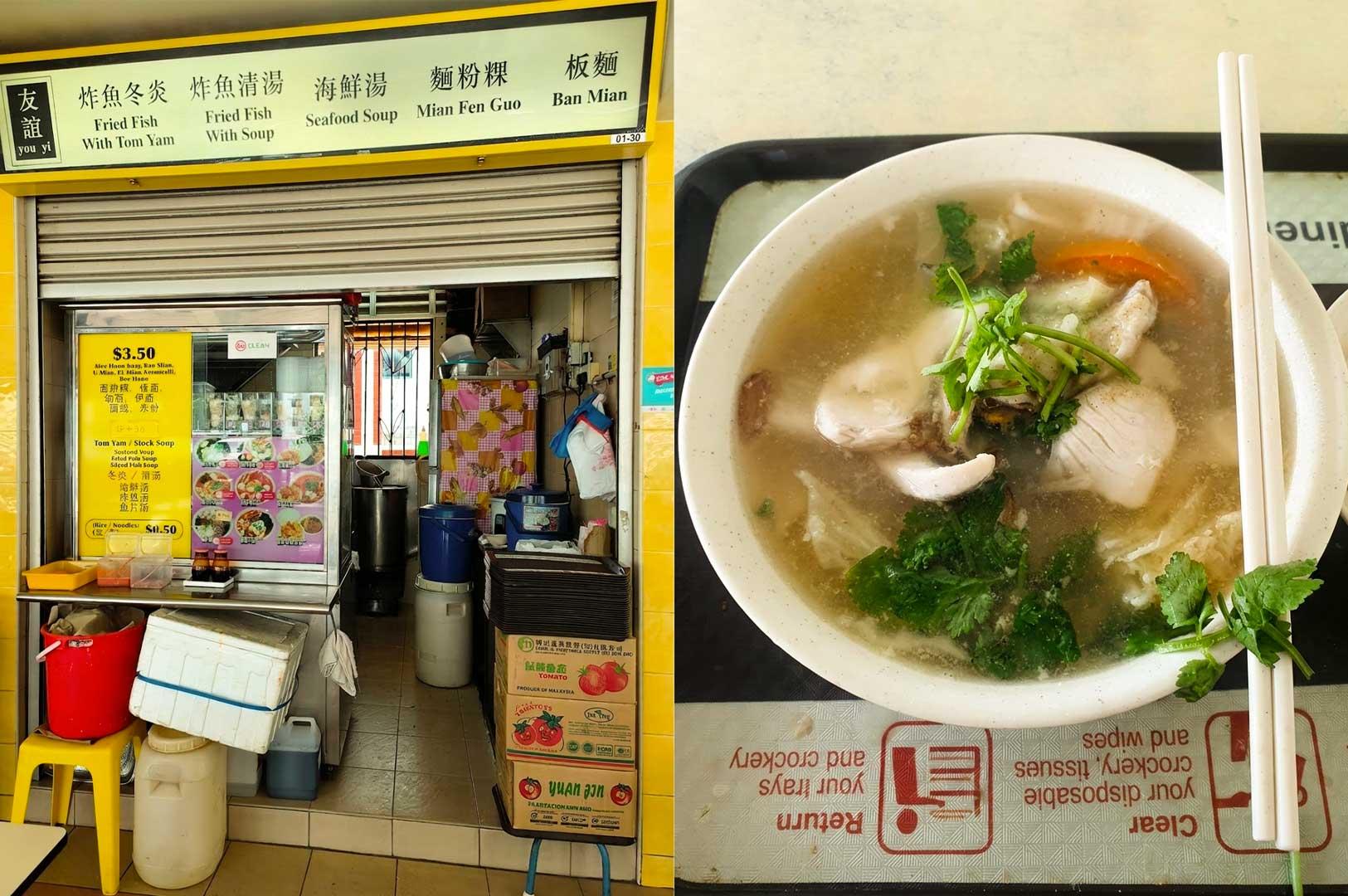
Opening Hours: Mon-Fri, 9:30 AM–4:00 PM; Closed Sat-Sun
You Yi is where many people head when char kway teow feels like too much. Its Tom Yum Fried Fish Soup and Seafood Soup draw queues on weekday lunch breaks, mostly from people who want a straightforward bowl that won’t slow down the rest of their afternoon. I must say, it does fares with other great fish soup hotspots I’ve tried on the island.
The seafood broth includes sliced fish, prawns, fishballs, minced meat, tofu, tomatoes, and vegetables. The clear broth is light and subtly sweet. If you want more punch, the tom yum version is tangier and stronger. Fried fish may come on the side so it stays crisp until you add it yourself. Rice or noodles can be added to make it a fuller meal.
Wallet Check: Around S$5, with rice or noodles previously available for a small extra charge.
Order This: Tom Yum Fried Fish Soup, or Seafood Soup if you prefer something gentler.
The Vibe: A practical weekday lunch stop for people who want soup without fuss.
Reality Check: The clear broth may taste mild to anyone used to stronger seasoning.
Book It or Wing It: Wing it, but arrive in the late morning to avoid the longest queues.
4. Guang Fa Laksa: A Food Centre Favourite for Cockle Lovers
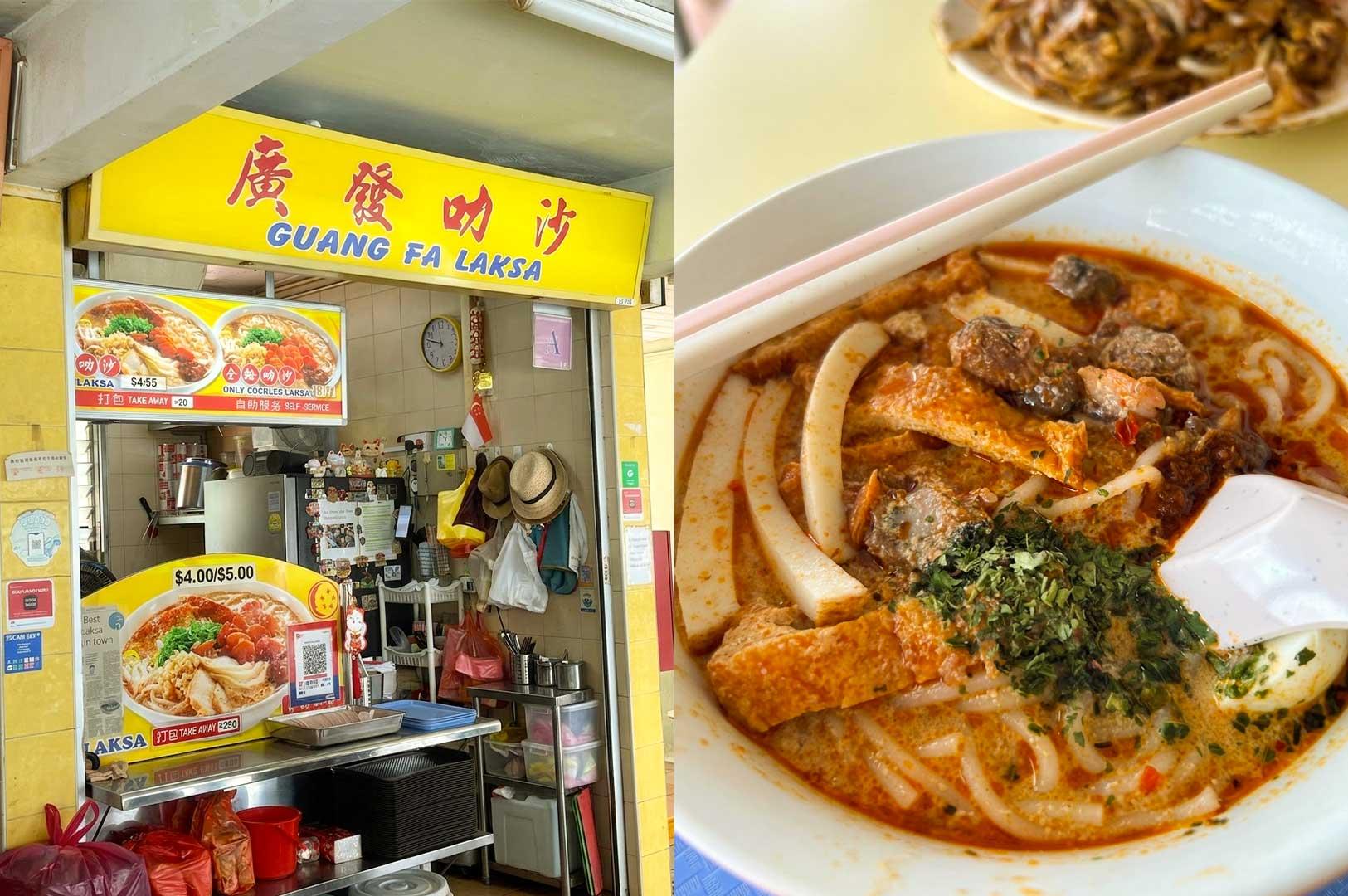
Opening Hours: Mon-Tues, Thurs-Sat, 8:00 AM–1:30 PM; Closed Sun and Wednesday
Guang Fa Laksa used to operate at Ghim Moh Market before moving to Havelock. It keeps a short, focused menu built around one dish. The Only Cockles Laksa is what most of its loyal following talks about, and the name tells you exactly what to expect.
Thick bee hoon comes with cockles (duh), bean sprouts, fish cake, and tau pok in a spice-forward gravy with a noticeable dried-shrimp flavour. Published descriptions differ slightly on how rich the gravy is, so expect some variation depending on your own taste. The cockles bring a briny note, and the tau pok soaks up the gravy. For seafood lovers, the cockle-heavy bowl is the clear choice.
Wallet Check: Regular Laksa costs around S$4–S$5, and the Only Cockles Laksa around S$6–S$7.
Order This: Only Cockles Laksa, or Regular Laksa for a more varied bowl.
The Vibe: A traditional laksa specialist with plenty of familiar faces in the queue.
Reality Check: If you dislike cockles or spice, this is not the bowl for you.
Book It or Wing It: Wing it, and try to arrive before peak hours.
5. Covent Garden Prawn Noodle: A Familiar Bowl of Old-School Prawn Mee
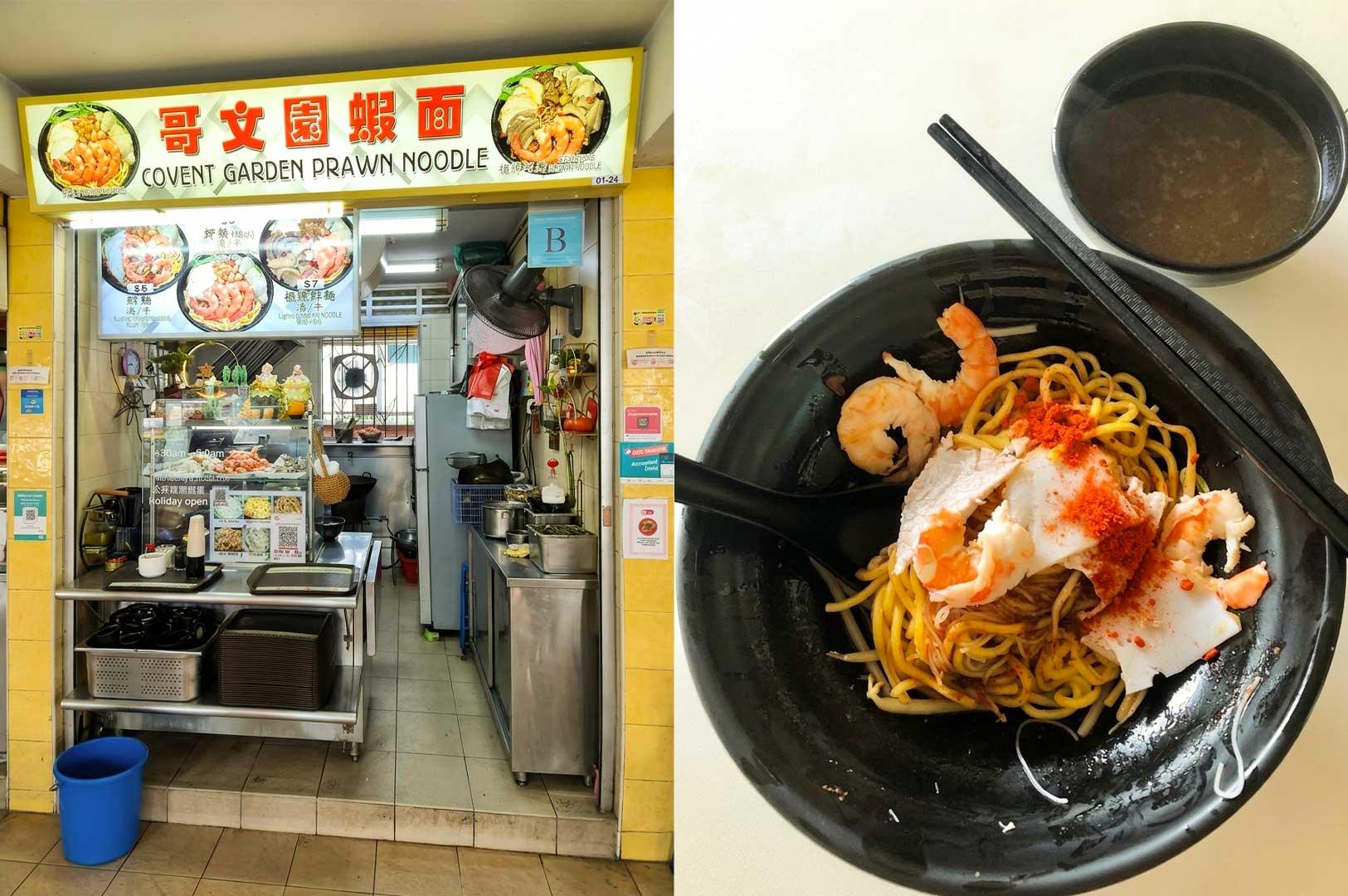
Opening Hours: Mon-Sat, 6:30 AM–1:30 PM; Closed Sun
This prawn noodle business dates back to the 1960s and has roots in traditional kok kok mee vending. It was once run by Mr and Mrs Lee, and is now in the hands of Ms Yim, who reportedly learned their original methods. That continuity matters in a place like Havelock, where people notice when a recipe changes.
The bowl brings prawns, sliced pork, fish cake, and bean sprouts, with a choice of noodles including ban mian. The dry noodles are tossed with chilli, garlic oil, seasoning, and pork lard. The soup uses a prawn-based broth that recent reviews describe as relatively light, and some reviewers prefer it to the dry version. It suits diners who like prawn mee that doesn’t overwhelm.
Wallet Check: Around S$5–S$7, depending on your order.
Order This: Sliced Prawn Noodle Soup.
The Vibe: An old-school breakfast and early-lunch noodle stall.
Reality Check: Anyone hoping for an intense, concentrated prawn broth may find this too gentle.
Book It or Wing It: Wing it, at breakfast or in the late morning.
6. Hong Kong Jin Tian Roast Meat: Roast Pork Belly, Char Siew and Roast Duck
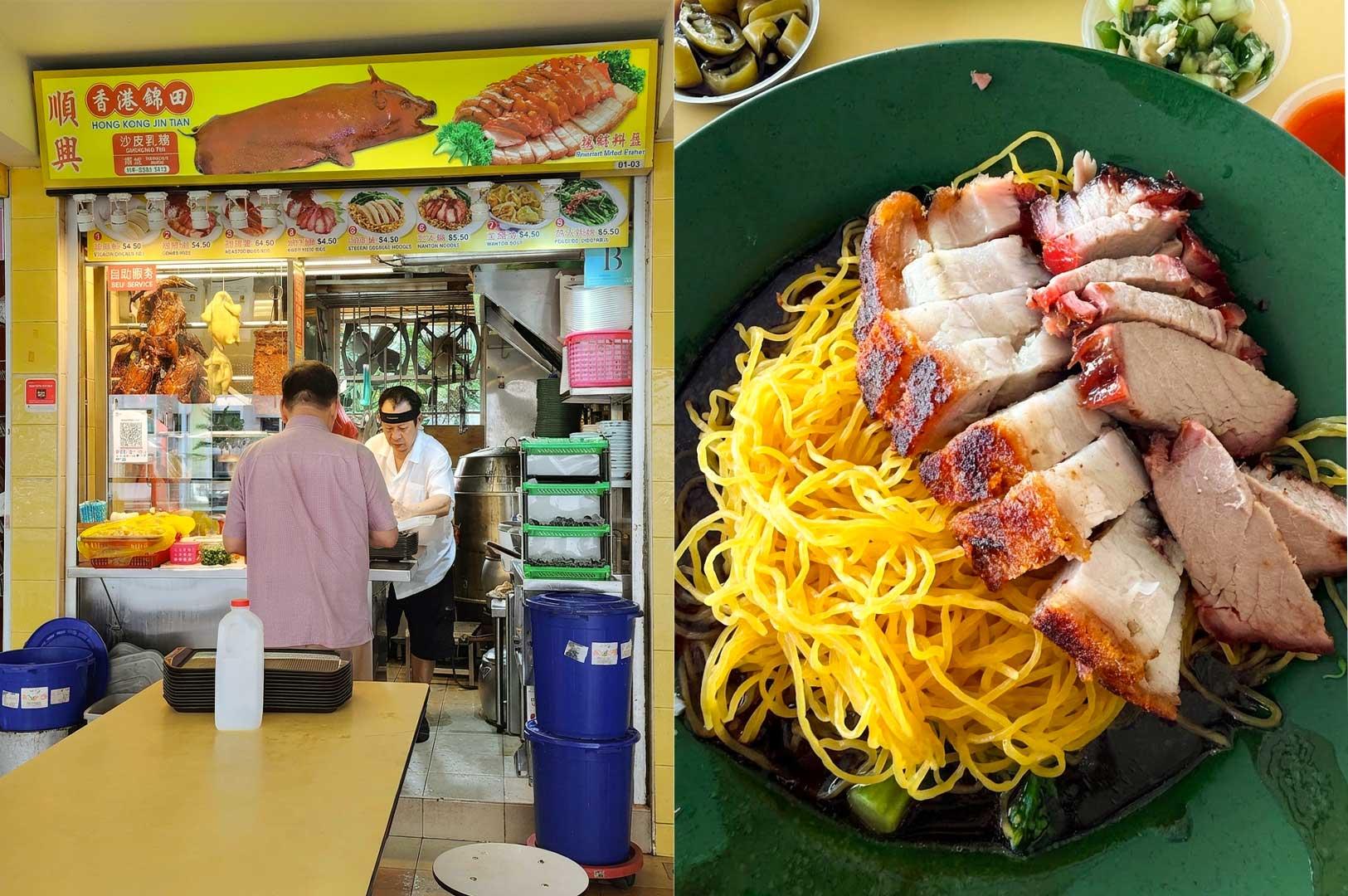
Opening Hours: Tues-Sun, 7:30 AM–4:00 PM; Closed Mon
Not every meal here needs to be noodles or soup. Hong Kong Jin Tian is an established roast meat business with ties to the Tiong Bahru MRT Station area, serving Cantonese-style roast pork belly, char siew, roast duck, and roast meat rice. It also offers wanton noodles for anyone who still wants a bowl.
The roast pork belly is often highlighted for its crispy crackling, and reviews suggest it is the stall’s strongest choice. The char siew has been described as relatively lean and less sweet than heavily glazed versions. The roast duck is known for savoury seasoning. Combination plates let you try several meats at once, all served with rice and a savoury sauce.
Wallet Check: Roast meat rice starts from around S$5, with combinations costing more.
Order This: Roast Pork Belly Rice, or a combination of roast pork belly, char siew, and roast duck.
The Vibe: A traditional Cantonese roast meat stall for a no-nonsense lunch.
Reality Check: Each meat has its own strengths, and some may sell out as the day goes on.
Book It or Wing It: Wing it, and go earlier for a fuller selection.
7. Authentic Teochew Tradition Mushroom Minced Meat Noodle: Bak Chor Mee with a Tiong Bahru Connection
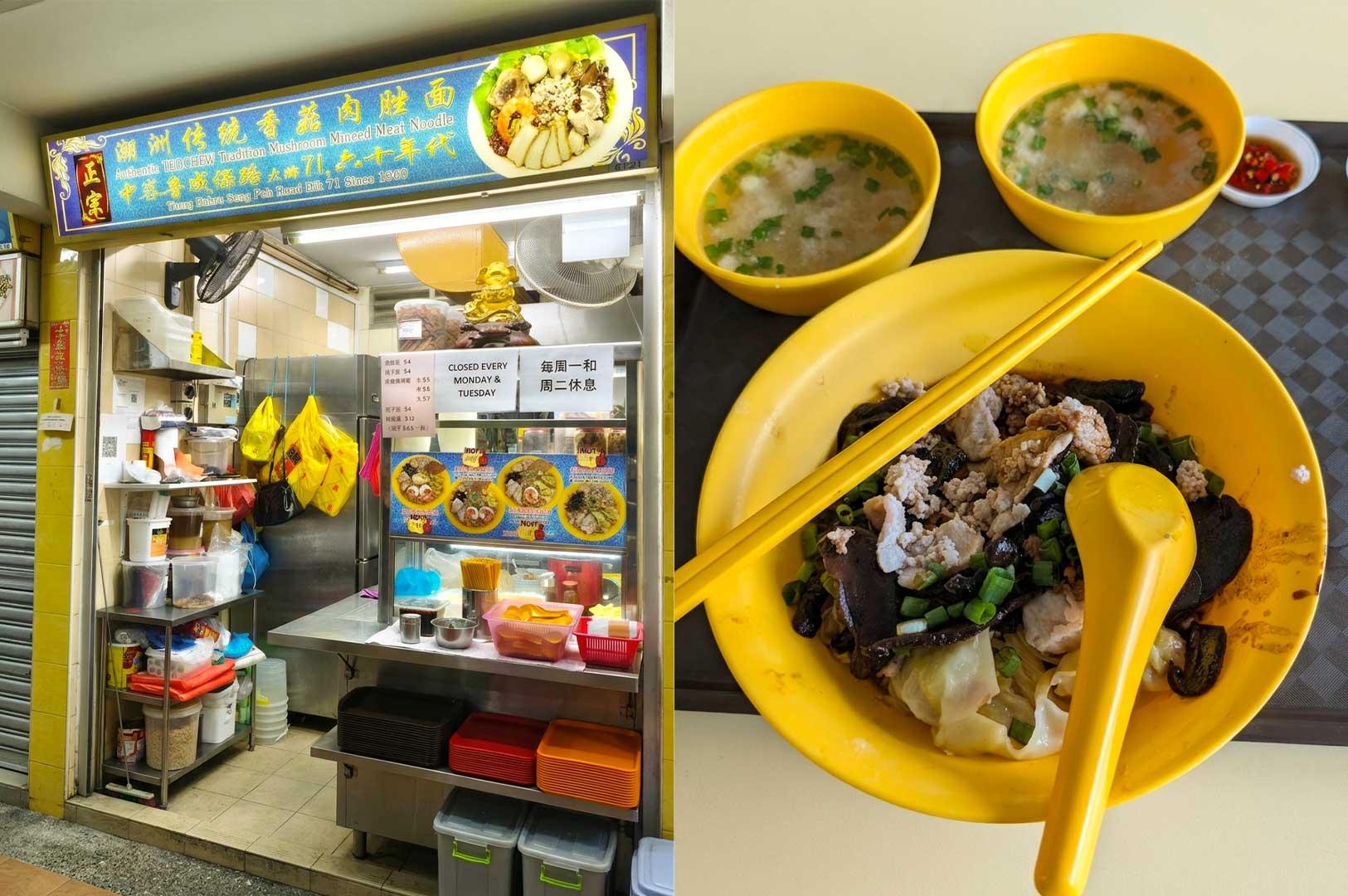
Opening Hours: Wed-Sun, 6:30 AM–2:00 PM; Closed Mon-Tues
Some regulars will remember this stall as Sixties Teochew Traditional Minced Meat Noodle in Tiong Bahru. In 2024, veteran hawker Ah Chye moved it to Havelock Road Food Centre. His noodle career spans around six decades, and the reopening drew former customers along with long queues.
The Mushroom Minced Meat Noodles come with mee kia or mee pok, topped with minced pork, sliced pork, mushrooms, wantons, dried sole fish, fried shallots, and pork lard. Black vinegar seasons the dry noodles and gives them a clear tang. The menu has also included fishball noodles and dumpling soup.
Wallet Check: Around S$5–S$7 for the signature noodles.
Order This: Mushroom Minced Meat Noodles with Mee Pok.
The Vibe: A traditional noodle stall followed by longtime customers from its Tiong Bahru days.
Reality Check: The strong vinegar and pork lard may be too much for those who prefer milder bak chor mee.
Book It or Wing It: Wing it, but arrive early in case the queues return.
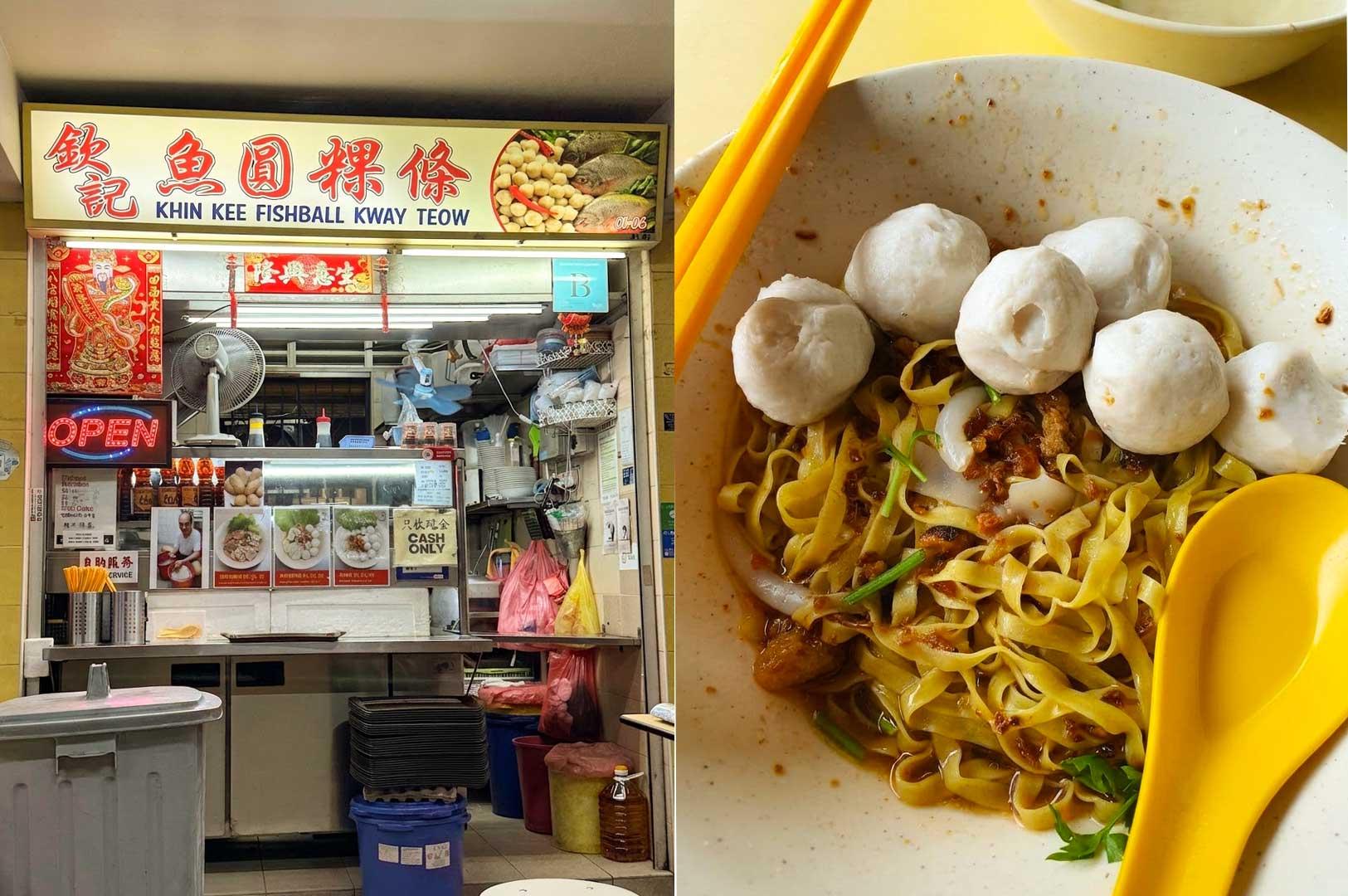
8. Khin Kee Fishball Kway Teow: Fishball Noodles That Keep Things Simple
Opening Hours: Wed-Mon, 7:30 AM–10:00 PM; Closed Tues
Khin Kee is the kind of stall that rarely makes headlines but fills a real need. It serves dry fishball noodles and fishball kway teow soup, alongside other familiar noodle dishes, and it has been recognised in recent Havelock Road food guides. On days when you want something plain and steady, this is where to look.
The fishballs and fish cake have been described as pleasantly bouncy, and the noodles as springy and chewy. The dry version is dressed with chilli and vinegar, while the soup comes in a relatively light broth. Toppings on some orders are modest, so the appeal here is texture and simplicity rather than abundance.
Wallet Check: Around S$4–S$6, a reasonable price for an everyday bowl.
Order This: Dry Fishball Noodles or Fishball Kway Teow Soup.
The Vibe: A familiar neighbourhood noodle stall serving uncomplicated meals.
Reality Check: Diners looking for a meat-heavy bowl may find the toppings too sparse.
Book It or Wing It: Wing it, and check current opening hours before you go.
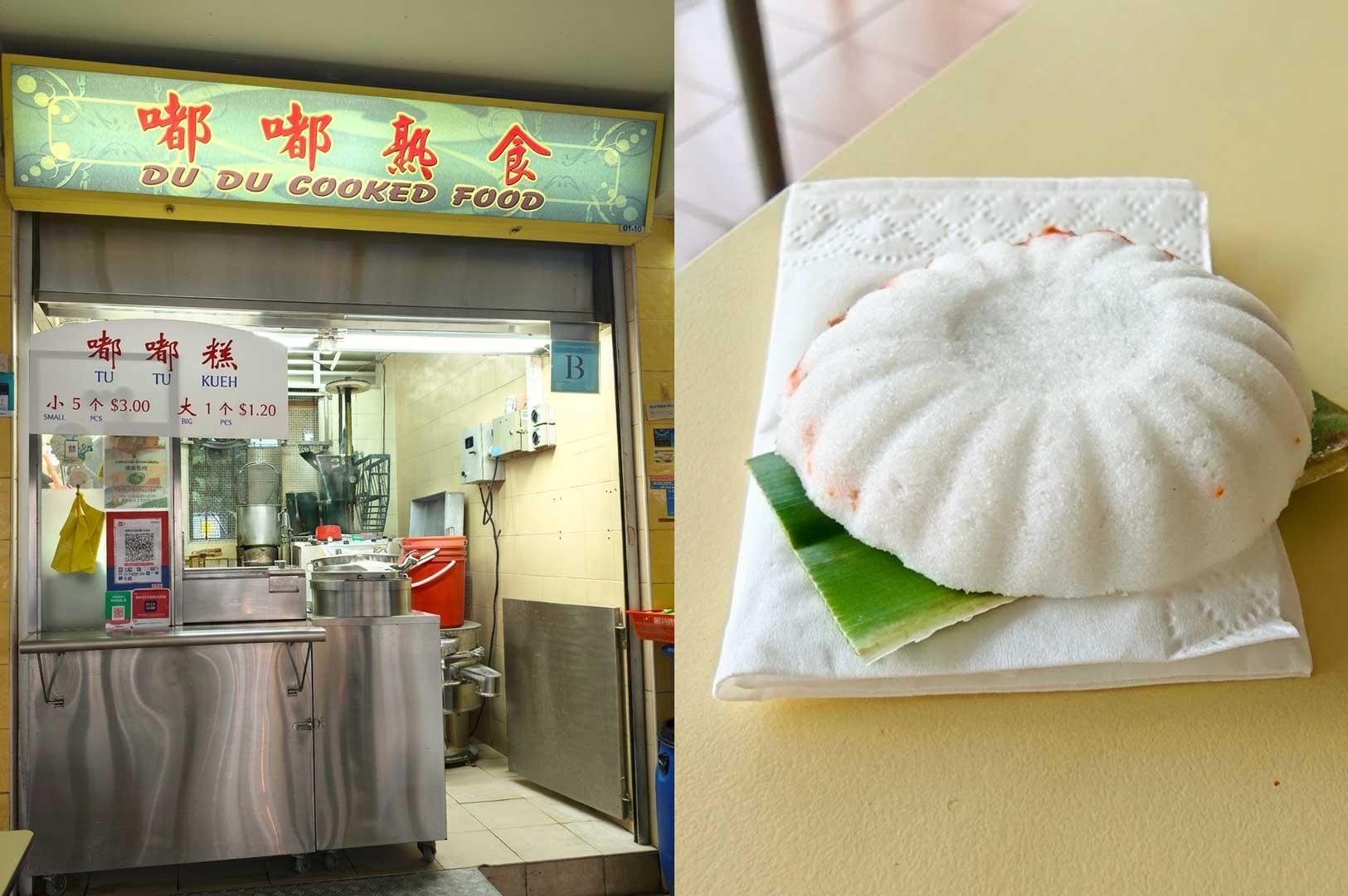
9. Du Du Cooked Food: Traditional Tutu Kueh to Finish the Meal
Opening Hours: Mon-Fri, 9:0 AM–4:00 PM Sat, 8:00 AM-4:00 PM; Closed Sun
Du Du Cooked Food belongs to a tutu kueh business with more than 50 years of history. It specialises in freshly steamed rice flour cakes with peanut or coconut filling, in regular and larger sizes. The business is also linked to other outlets, including one in Jurong West that holds Michelin Bib Gourmand recognition.
The steamed casing is soft and delicate. The coconut filling uses shredded coconut and gula melaka, while the peanut version has a coarser texture and a different kind of sweetness. These are best eaten warm, soon after steaming. Think of them as a snack or a small dessert after a meal elsewhere in the centre.
Wallet Check: Around S$3 for five regular pieces, with larger ones previously listed at S$1.20 each.
Order This: Coconut Tutu Kueh, with a few peanut pieces for contrast.
The Vibe: A traditional snack stall focused on cakes steamed to order.
Reality Check: They are small and delicate, so they don’t travel well or keep long.
Book It or Wing It: Wing it, and ask for a freshly steamed batch.
Why Havelock Road Food Centre Still Matters
Havelock Road Food Centre is at Blocks 22A/B Havelock Road, near Jalan Bukit Ho Swee and the Singapore River. It holds about 30 cooked-food stalls in a distinctive L-shaped layout, which makes it easy to walk the length of it before deciding.
This is a working hawker centre, not a food tourism stop. Its longstanding stalls specialise in noodles, soups, roast meats, turtle soup, nasi lemak, and snacks, the kind of traditional Singaporean dishes that fit into an ordinary day.
It sits within the wider Havelock and Tiong Bahru area and is reachable from Havelock MRT Station on the Thomson-East Coast Line. For those coming from Tiong Bahru MRT Station, it is a short bus ride or short walking distance away, making it accessible for neighbourhood food crawls. Several of its better-known stalls trade mainly at breakfast and lunch, so the centre keeps the rhythm of the neighbourhood around it.
What Makes the Food in Havelock Worth Returning For
Havelock doesn’t try to reinvent itself. Its stalls have stayed relevant by cooking the same dishes carefully, day after day, for customers who notice the difference.
That is the quiet strength of the cooked food centre in Havelock. A family recipe passed to a daughter. A noodle stall that followed its regulars from one street to the next. A batch of tutu kueh steamed while you wait.
Not every stall here will suit you. You might want the richness of char kway teow or roast meat. Or you might be happier with a light fish soup or a plain bowl of fishball noodles.
Either way, you’ll probably find a table you want to come back to.