
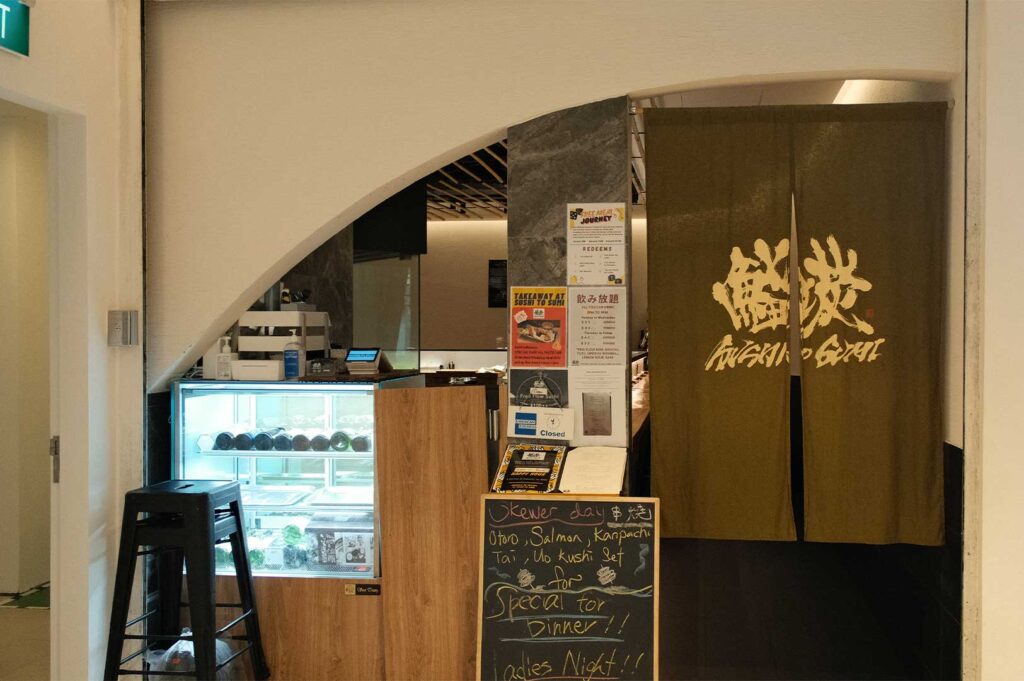
There are meals you clear an evening for, and then there are meals you somehow squeeze between a 12pm call and a 2pm meeting. Omakase normally belongs firmly in the first category. Sushi To Sumi, in the middle of Raffles Place, seems to think otherwise.
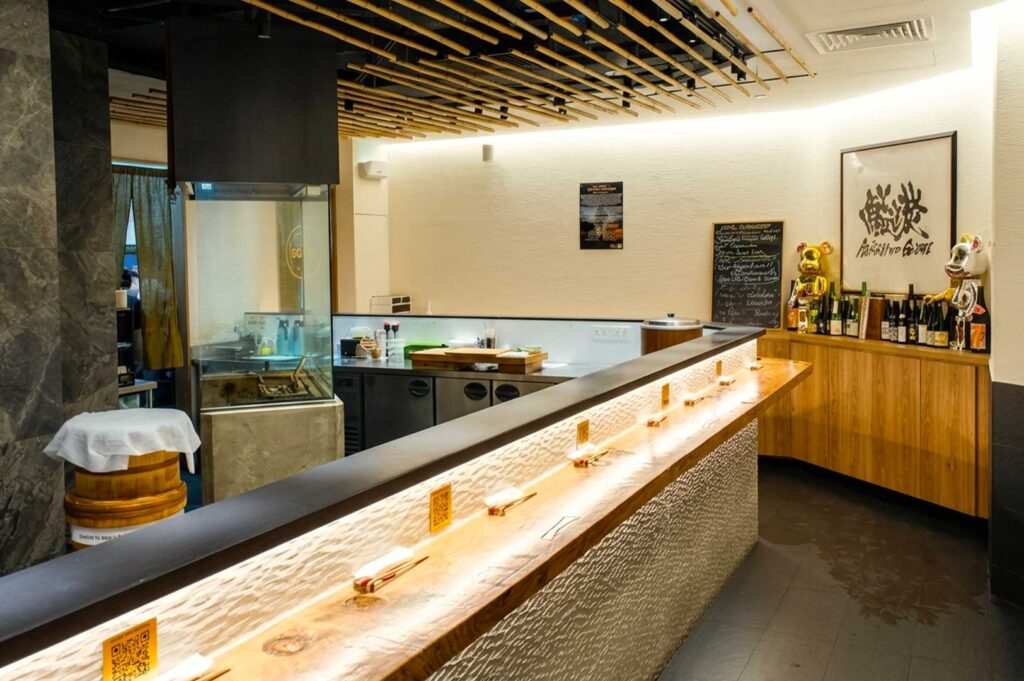
In this sushi restaurant, lunch happens standing at the counter. The chef works in front of you, the sushi comes piece by piece, and the whole thing is designed to fit into roughly 30 to 45 minutes. There is no settling into a plush chair, no lengthy preamble and very little incentive to linger once you are done.
That might sound like omakase stripped of its hospitality. After eating here, I think it is closer to hospitality designed for someone who has somewhere else to be.
First, Yes, You Really Do Stand
The standing counter is the part everyone is going to talk about first, so we may as well deal with it.
Sushi To Sumi follows the Japanese tachigui style of eating sushi at a standing counter. Historically, sushi was not always the lengthy special-occasion experience many of us associate with omakase today. It developed partly as quick urban food: something fresh, convenient and made to be eaten without losing half the day.
That history makes the concept feel considerably less gimmicky once you are actually at the counter.
And standing changes the mood more than I expected. You do not arrive with the expectation that somebody needs to entertain you for two hours. You watch the chef, eat each piece as it arrives and move naturally through the meal.
For anyone whose ideal lunch includes leaning back for coffee afterwards, this probably is not your format. But if you have spent enough weekdays watching your lunch break disappear while waiting for courses, the appeal becomes obvious very quickly.
This Is Fast, But It Does Not Feel Like Fast Food
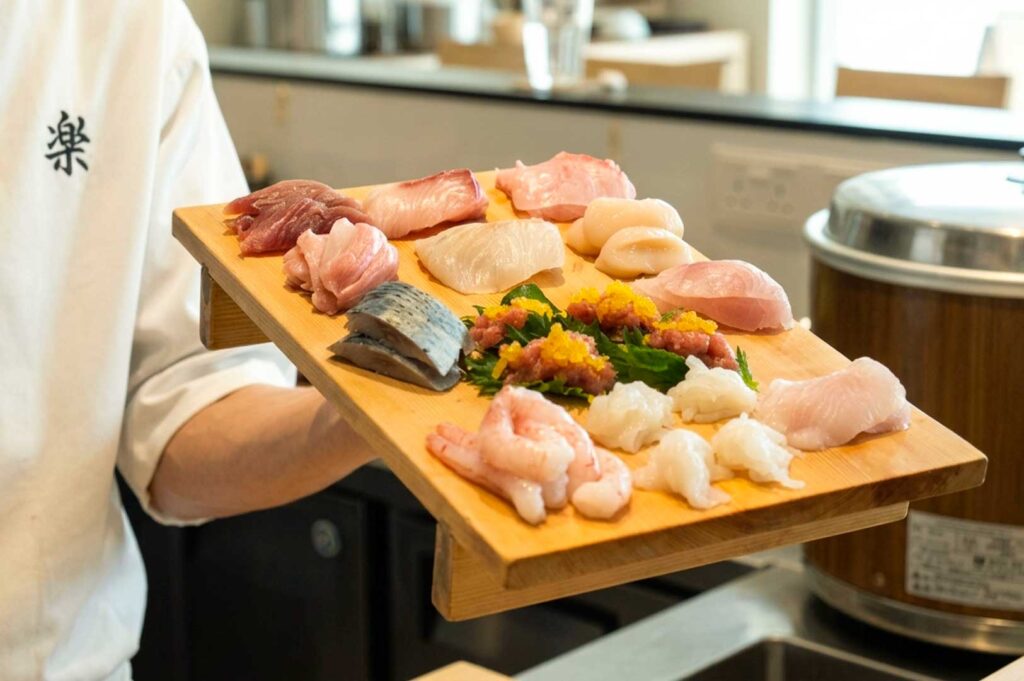
The clever part is that Sushi To Sumi has removed time from the experience without treating the food as something disposable.
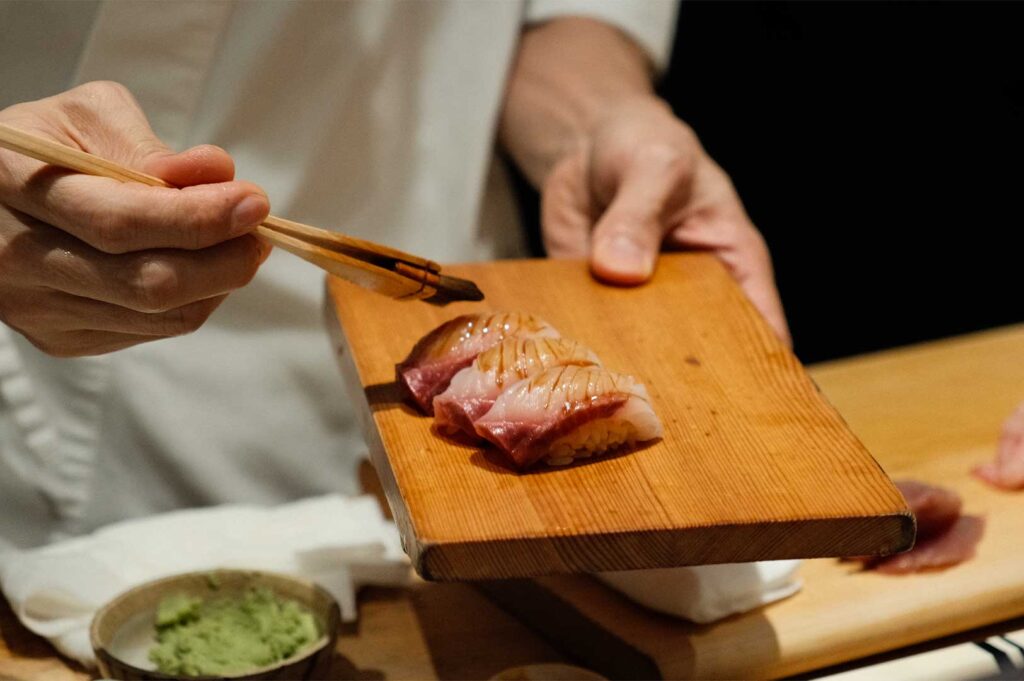
The sushi menu changes according to season and availability, with the chef deciding how the fish should be served. Some pieces become nigiri, others are better suited to sashimi, while certain fish head towards the binchotan charcoal instead. The Japanese white charcoal is also where the “Sumi” part of the restaurant’s name comes from.
So despite the pace, you are not simply receiving a predetermined row of interchangeable sushi.
That variation matters because a condensed meal could easily become tiring. Piece after piece of similarly rich fish and rice would make 30 minutes feel much longer than it sounds. Moving between raw fish, nigiri and the cleaner smokiness of charcoal gives your palate something different to do.
It is a short meal, but not necessarily a monotonous one.
The Best Seat in the House Might Be for One
I also think Sushi To Sumi makes more sense alone than many restaurants do.
Solo dining in Singapore is hardly unusual, but some restaurants still make eating alone feel like you have turned up without the rest of your party. A standing sushi counter solves that almost accidentally. There is no lonely table for one and no need to stare at your phone between courses.
Your attention naturally goes towards the chef and whatever is being prepared in front of you.
For the Raffles Place crowd (which I think Raffles Place Food That’s Worth Leaving Your Desk For will also interest you), that makes the restaurant particularly useful. You can walk in alone, eat properly and return to the office without recruiting three colleagues just to justify lunch.
There is something quite nice about that. Not every good meal needs to become a social event.
A Fishmonger Behind a Sushi Restaurant Makes Sense
The quality proposition becomes easier to understand once you know the restaurant’s relationship with Araya Shouten, the Japanese fishmonger founded by Hokkaido-born Araya-san.
Araya-san comes from a fishing family, and that background influences how Sushi To Sumi thinks about seafood. The connection is less interesting as a piece of branding than as an explanation for why so much attention here falls on the fish itself.
The menu follows what is in season rather than forcing the same selection every day. The restaurant also follows a whole-fish mentality familiar in Japanese seafood cooking: bones can become soup, while kama, or fish collar, can go over the charcoal rather than into the bin.
That makes the food feel considered without requiring somebody to give you a ten-minute speech about sustainability before you eat it.
Nothing needs to be overly dressed up. If the fish is good, the fish gets to do most of the work.
But Is a Quick Omakase Actually Satisfying?
This was my bigger question.
Speed is useful, but nobody wants to spend serious lunch money and find themselves looking for a snack at 3pm. Nor do I particularly want an expensive meal to feel as though somebody has started a stopwatch when I walk through the door.
Sushi To Sumi’s pacing works because the speed feels built into the restaurant rather than imposed on the diner.
The counter format removes many of the pauses that stretch traditional omakase meals. The chef is directly in front of you. The sushi reaches you as it is made. There is simply less empty time between eating. That distinction matters.
You are eating quickly because the restaurant has been designed efficiently, not because someone is trying to get rid of you quickly.
Time Is Part of Hospitality Too
We usually describe good hospitality in terms of attentiveness: longer meals, comfortable chairs, detailed explanations and staff who encourage us to stay.
Sushi To Sumi makes a surprisingly convincing case for the opposite. Sometimes being looked after means a restaurant understanding that you have 45 minutes.
For a CBD professional, saving two hours is not a minor feature added to the meal. It can be the reason the meal is possible at all. You still get the interaction of a chef’s counter, serious fish and food prepared directly in front of you. What disappears is much of the ceremony surrounding it.
That will not suit every occasion. I would not choose standing lunch for the friend who wants to spend their birthday slowly working through sake and sushi. Sushi To Sumi itself recognises this: dinner changes rhythm, with chairs brought out and a slower experience built around sushi, charcoal-grilled dishes and sake.
Lunch has a different job.
So, Who Should Actually Go?
Go when you are in Raffles Place, want genuinely good sushi and absolutely cannot explain to your boss why lunch took three hours.
Go alone. Go between meetings. Go when conveyor-belt sushi feels too casual but a traditional omakase feels like more commitment than your day can handle.
Do not go at lunch expecting to sink into a chair and make an afternoon of it. That slightly misses the point.
Sushi To Sumi works because it understands that convenience and quality do not necessarily have to sit at opposite ends of the restaurant spectrum. There is real pleasure in a long meal when you have the time for one.
There is also something deeply satisfying about eating very well and still making your 2pm meeting.
Some days, that might be the better hospitality.