
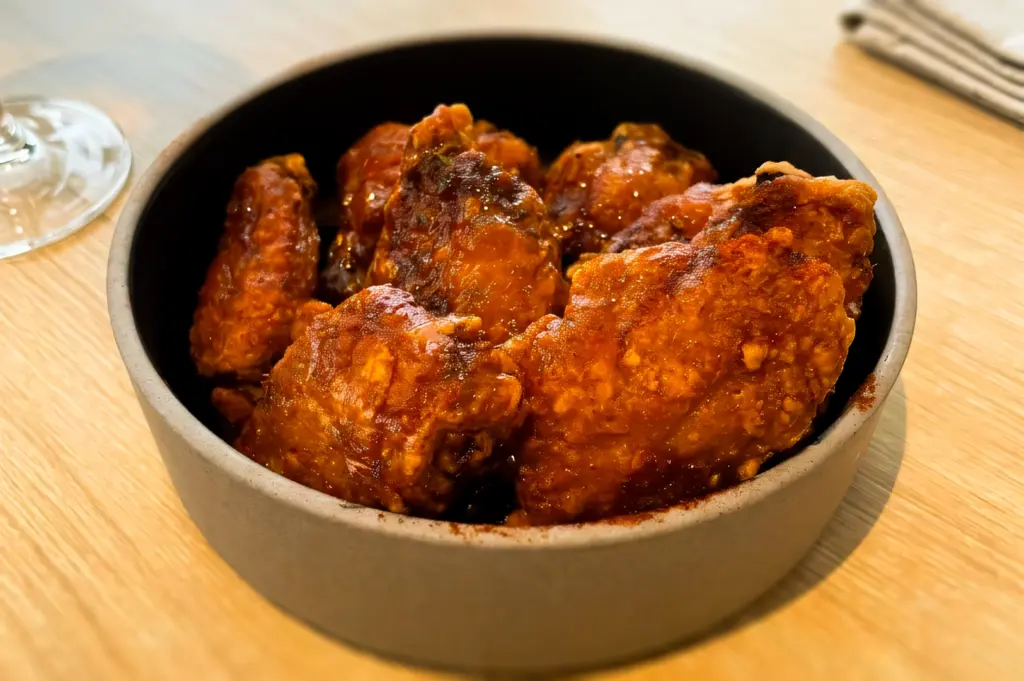
I sat by the window at Lola’s Cafe in Holland Village, eating their signature honey paprika crispy wings. The table next to me was deep in debate about the acidity of their filter coffee. I listened to their conversation and smiled. I did not grow up speaking that language.
My parents saw food as pure utility. Dinner was a fast rotation of familiar and heavy dishes. We ate quickly at a small wooden table. We never discussed flavor notes or ingredient sourcing. We did not chase weekend reservations. A successful meal was simply one that left us full.
When I started earning my own money, dining out became a way to explore a different life. I had to teach myself how to taste. I learned to appreciate the bitter edge of an amaro. I figured out how to casually order natural wine. I treated restaurant menus like textbooks. I thought I was just building a better palate.
We adopt these culinary habits to build a new version of ourselves. We want our restaurant choices to show that we have moved up in the world. We use complex food to signal our independence from our simple beginnings. Taste is rarely just about what happens on the tongue. It is an acquired vocabulary we use to belong in rooms our parents never entered.
There is a quiet weight to elevating your tastes. Every new appreciation creates a small distance from the kitchen table you grew up at. I finished my meal and looked out at the busy street. The food was undeniably perfect. I just wondered if my younger self would recognize the person eating it.