
I sat at the tasting counter at Cloudstreet on Amoy Street, staring at a meticulously plated slice of their signature Sri Lankan stout and licorice bread.
The room was hushed and expectant. The service was entirely flawless.Yet, as I took my first bite, my mind drifted to a noisy, humid hawker centre just a few blocks away.
I realized I would rather be eating a simple plate of roast meat and rice.
**Fine dining is essentially a performance.**We book these tables months in advance. We dress carefully to match the curated aesthetic of the room.We sit through extended explanations of foraging techniques and fermentation cycles.It is a beautiful ritual, but it remains a ritual. You are an active participant in an elaborate play.
Hawker food requires no such performance.
There is a profound comfort in the complete anonymity of a plastic table bolted to the floor.Nobody cares what you are wearing. Nobody is analyzing how you hold your chopsticks. You are allowed to just exist.
I noticed this same contrast last week.I was at Apollo Coffee Bar in Serangoon Gardens, drinking their signature iced cereal milk latte. The crowd there was hyper-aware of their surroundings. Every patron seemed to be subtly watching everyone else.
We often dine in these spaces to borrow their cultural capital. We want the refinement of the room to validate our own tastes. It shows that eating is rarely just about flavor. It is about what the experience reveals about our need for status.
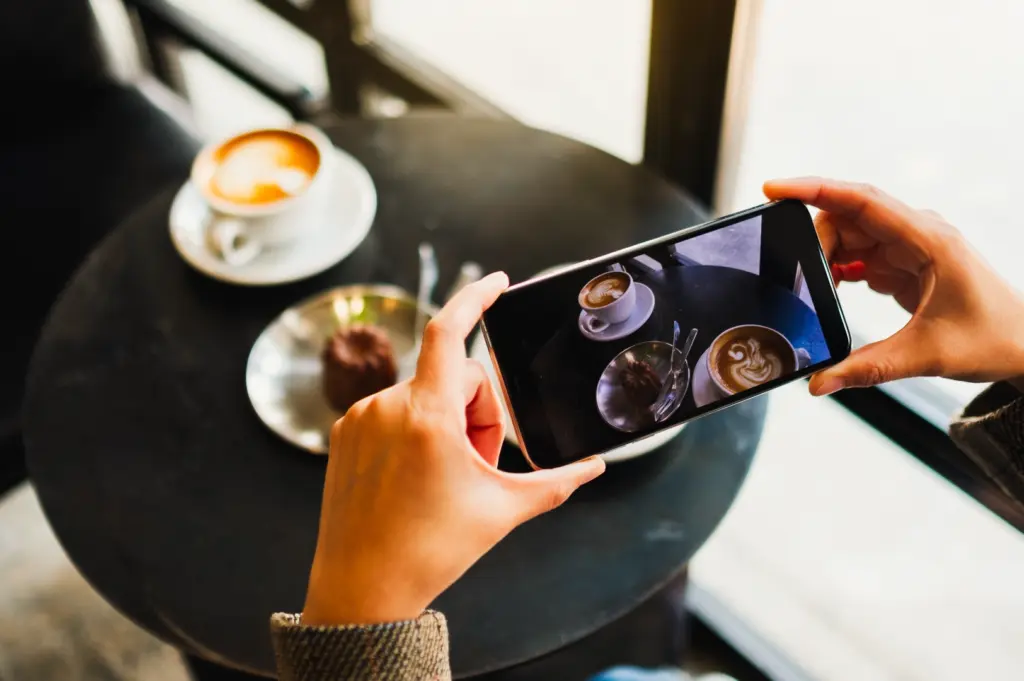
I was sitting at a small window table at September Coffee in South Bridge Road, adjusting my phone to capture the light hitting my iced black sesame latte. I took three photos from different angles before I even thought about taking a sip. By the time I finally drank it, the ice had started to melt. It was in that quiet, slightly watered-down moment that I realized I was not actually enjoying myself. I was just clocking in.
Eating out used to be an escape. Now, for so many of us, it feels like an administrative task.
We treat restaurants like assignments on a checklist. We research the exact right dishes to order, memorize the lighting conditions, and mentally draft our opinions before the plates even hit the table. The dining room has transformed into a production set, and we are the exhausted directors trying to manage the shoot.
The pressure to curate a perfect life has quietly turned our meals into labor.
I noticed this shift clearly a few nights ago at Fura on Amoy Street. I ordered their signature Jellyfish Martini, a genuinely clever and sustainable drink. But as I held the glass, my immediate instinct was not to taste it. My brain was already working, dissecting the ingredients and formulating an interesting way to describe the concept to someone else. I was mentally writing a review for an audience of nobody.
There is more to eating than taste. The way we consume our food reveals exactly how we process our lives.
Right now, we are so desperate to capture and optimize every experience that we forget how to simply sit and be fed. We have convinced ourselves that a meal only matters if it is properly documented and converted into social currency. The actual act of eating becomes secondary to the act of being seen eating.
I put my phone face down on the table at the cafe. The ambient noise of the room suddenly felt a little louder, a little more human.
I took another sip of my drink, not thinking about the aesthetic or the roasted flavor notes. I just let it be cold. It takes a surprising amount of effort to let a meal just be a meal.