
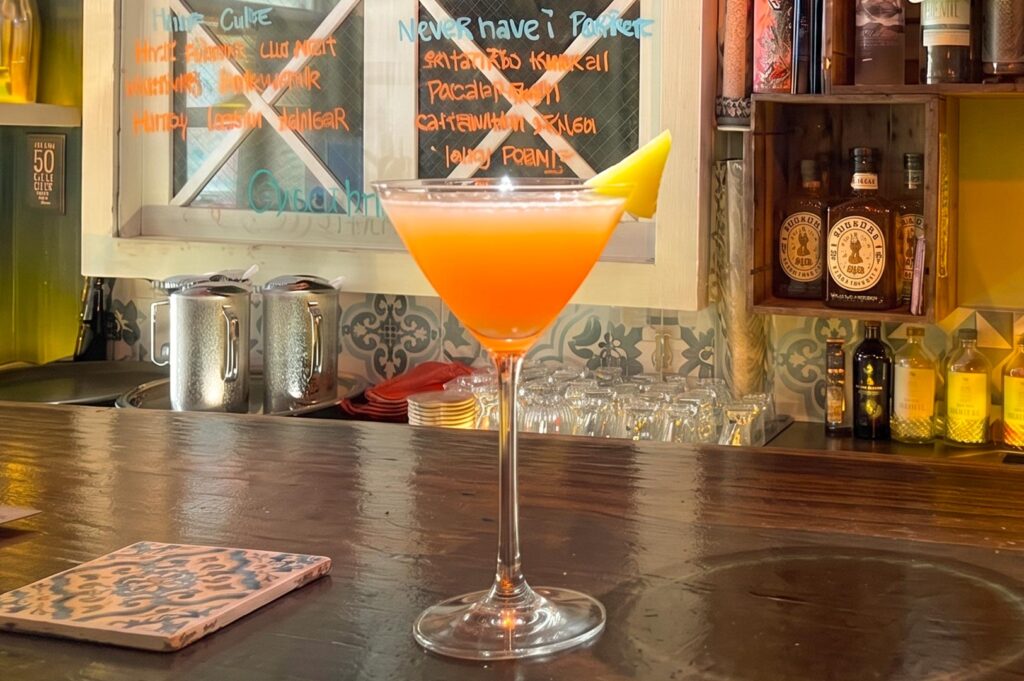
The menu at Sago House was written by hand.
Not printed, not designed, not laminated into something you could wipe clean. Just chalk and marker on the glass, a few drinks listed in someone’s real handwriting, changed depending on what they had that night. I stood there in the narrow Chinatown shophouse on Duxton Hill that I had seen on Neighbourhood Life, reading a cocktail name that had been half rubbed out and rewritten, and I felt something loosen in me that I didn’t know was tight.
I ordered whatever they were pouring that evening. I didn’t really care what it was called.
There’s a kind of tiredness that comes from too much polish. You notice it after enough meals in rooms that have been arranged down to the last detail. The perfect font. The curated playlist. The waiter reciting the provenance of the butter. All of it competent, all of it fine, and none of it asking anything of you except that you admire it.
Sago House didn’t do that. The bar was cramped. Someone reached past me to grab a bottle. The list kept shifting because the bartenders were making things up as they went, working with what was in front of them. Nothing about it was trying to be impressive. And somehow that made me pay closer attention than I had in months.
I think we’ve confused polish with care.
A handwritten menu tells you a person was here. It tells you someone stood at that window with a marker and decided, tonight, this is what we have. There’s a fingerprint in it. A perfect menu erases all of that. It smooths away the human until what’s left is a surface, and surfaces are easy to forget.
The imperfect places ask you to meet them halfway. You have to lean in, read the smudged writing, trust the person behind the counter when they say they’ll make you something. And in that leaning in, you become a participant instead of an audience. You stop performing the role of someone being served, and you just become a person, standing in a small room, having a drink.
Earlier that week I’d been somewhere spotless, an iced latte at Apartment Coffee in Selegie, everything exactly where it should be. It was good. I remember almost nothing about it.
I remember the windowpane.
Maybe what I’m really tired of is being managed. The perfect menu, the perfect room, the whole apparatus designed to make sure I never have to think or trust or reach. It works. It also leaves nothing behind.
What stays with me are the rough edges. The place that couldn’t be bothered to hide the fact that people work there, that things run out, that a hand held the marker.
I finished the drink and didn’t take a photo of the glass. I looked at the writing on the window instead, already half smudged, already becoming something else by tomorrow.
That felt closer to true than anything on a printed card.